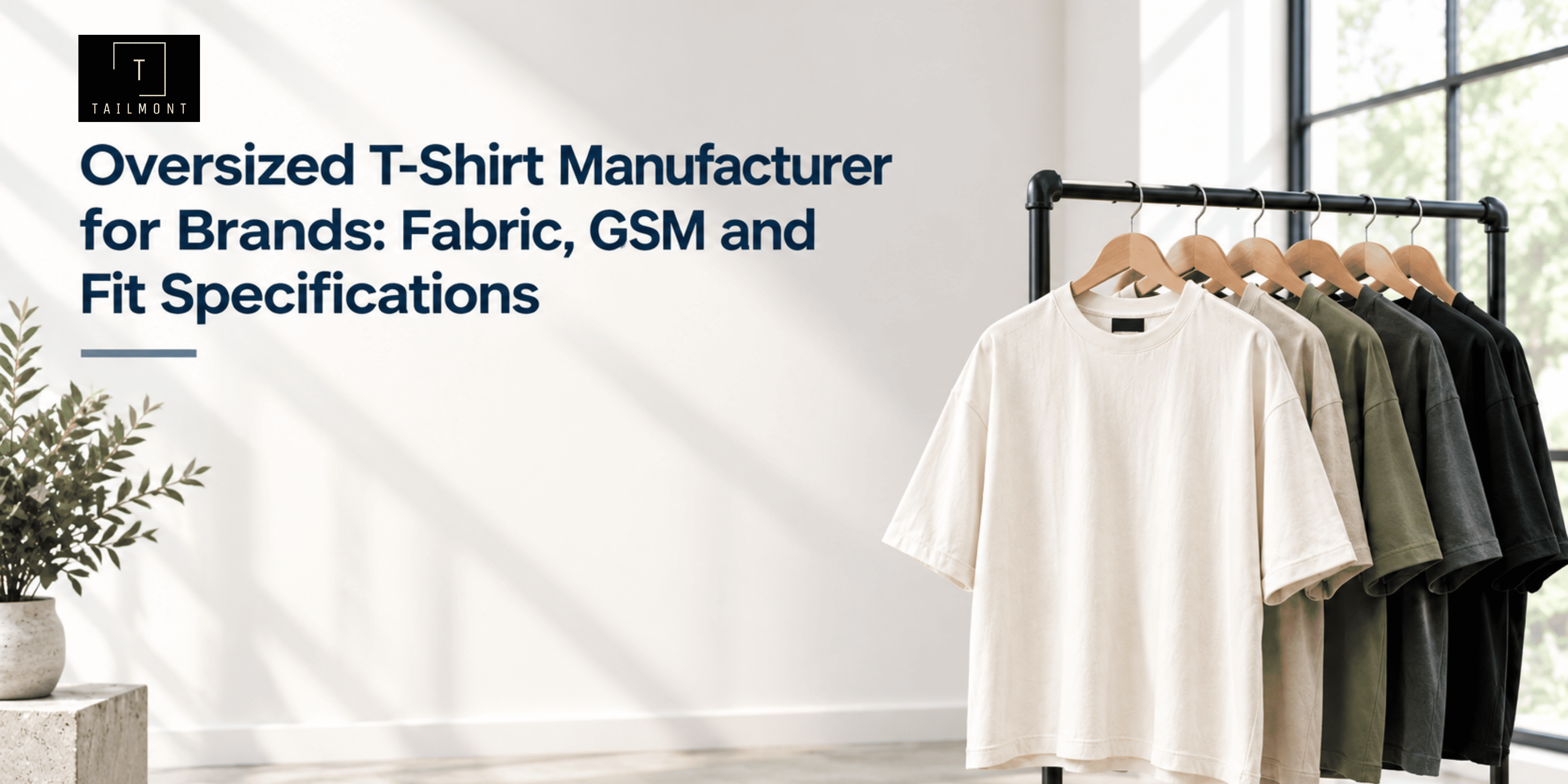
Oversized T-Shirt Manufacturer for Brands: Fabric, GSM and Fit Specifications
An oversized T-shirt is not a regular T-shirt in a larger size. The silhouette depends on a deliberate combination of fabric weight, shoulder construction and proportion. Get one of these wrong and the garment can look either shapeless or stiff. If you are briefing an oversized T-shirt manufacturer, the quality of your specification directly affects the quality of your product.
This guide covers the decisions that matter: fabric and GSM, fit and measurements, construction details, decoration, and what to approve at sampling stage.
What Makes a T-Shirt “Oversized” in Production Terms
Manufacturers work from measurements, not words like “relaxed” or “boxy”. In practice, an oversized fit is defined by a wider chest relative to a standard block, a dropped shoulder seam, often a longer body and sometimes wider sleeves.
Brands differ on how far to push each measurement, so the first step is to translate your reference into numbers. This gives an oversized T-shirt manufacturer a measurable fit target. A clear brief helps an oversized T-shirt manufacturer reproduce the intended shape consistently.
|
Measurement |
What it controls |
Brief tip |
|
Chest width |
How roomy the body feels |
Give it in cm or inches, measured flat, at a stated point below the armhole. |
|
Body length |
Proportion and how the hem sits |
State the measuring point, such as high point shoulder to hem. |
|
Shoulder drop |
The relaxed, dropped-shoulder look |
Provide the shoulder width and where the seam should land. |
|
Sleeve length and opening |
Balance between body and arm |
Specify both; a wide body with a narrow sleeve looks unbalanced. |
|
Neck width and rib height |
How the neckline holds |
A stable rib matters more on heavier fabrics. |
For brands working with a drop shoulder T-shirt manufacturer, these measurements are particularly important because the shoulder seam is a major part of the intended silhouette.
Fabric and GSM for Oversized T-Shirts
GSM stands for grams per square metre and describes fabric weight and density. Oversized silhouettes generally need more fabric body to hold their shape, so brands often move to heavier weights than for a regular tee.
Treat any figure as a starting point. General industry practice puts regular T-shirts around 160–200 GSM and heavier, more structured pieces above that, but ranges vary by supplier and market.
A heavyweight oversized tee is not automatically better. GSM alone does not determine quality. Premium yarn, fabric construction, finishing processes and stitching standards also contribute, and the right GSM depends on the intended use of the product.
A very heavy fabric can make an oversized fit stiff and warm, while a very light fabric can lose the intended silhouette after washing. This is why buyers should confirm the oversized T-shirt GSM on a physical sample rather than choosing weight based only on a number. An oversized T-shirt manufacturer can assess the balance between structure and comfort.
Fibre and Finish
TailMont works with fabrics including 100% cotton, organic cotton, Pima cotton, cotton blends and performance fabrics. Your choice affects hand-feel, price and wash behaviour.
For guidance on cotton grades, see TailMont’s article on organic cotton versus Pima cotton.
Shrinkage
Cotton knit fabrics can change dimension after washing, and an oversized garment is judged by its proportions. Even small changes can alter the look.
Ask how the fabric is pre-treated, agree on an acceptable shrinkage tolerance and wash-test the sample. This is especially important when preparing an oversized T-shirt fabric for brands that needs to maintain a specific fit.
Construction Details That Affect Quality
Neck rib: Should recover its shape and lie flat. Weak ribs can wave or stretch out, especially on heavy fabric.
Shoulder seam: A dropped shoulder needs clean, flat stitching and consistent placement.
Hem and sleeve finish: Should be even and match the intended look, whether a clean finish or wider hem.
Side seams: Check that they hang straight after washing, with no twisting.
These details should be included in the spec sheet when working with an oversized T-shirt manufacturer so the approved sample can be compared objectively with bulk production.
Printing and Embroidery on Oversized Tees
Oversized T-shirts are frequently used for graphic and brand-led designs, so decoration placement matters.
Give placement as a measurement from a fixed reference point, such as the neckline or shoulder seam. The same artwork can look different on a larger body panel, so approve printing or embroidery on a physical sample.
For custom oversized T-shirts for brands, the artwork size, placement, technique and measurements should be confirmed before production. Share these requirements with your oversized T-shirt manufacturer before sample approval.
Common Mistakes
- Scaling up a standard size chart instead of building measurements for the oversized silhouette.
- Choosing GSM by reputation rather than by use, season and feel.
- Skipping the post-wash measurement check.
- Changing the specification after sample approval, which means starting a new sample.
- Leaving tolerances unwritten.
- These issues can become expensive when sourcing private label oversized T-shirts, particularly when the bulk order has already entered production.
How to Evaluate an Oversized T-Shirt Manufacturer
Before placing an order, ask:
- Can you work from a reference garment or measurement chart?
- How is fabric weight confirmed and controlled?
- How do you approve printing or embroidery placement?
- What do quality checks cover, and at which stages?
- How do you keep repeat orders consistent with the approved sample?
A reliable men’s oversized T-shirt supplier should be able to explain these points clearly before moving from sampling to bulk production. Confirm that the oversized T-shirt manufacturer can maintain the same standards on repeat orders.
How TailMont Approaches Oversized T-Shirts
Oversized T-shirts are part of TailMont’s men’s range, alongside round neck and polo T-shirts and casual and formal shirts.
Buyers can customise fabric selection, colours, fit, GSM, stitching details and other garment specifications, with specifications finalised before sample approval and bulk production.
Pricing depends on factors including fabric, GSM, product design, order quantity, printing or embroidery, packaging and shipping requirements. TailMont provides quotations tailored to each project.
TailMont’s MOQ is 500 pieces.
Quality checks listed by TailMont cover fabric quality, cutting accuracy, stitching, measurements, printing and embroidery, colour consistency, finishing and packaging.
Samples are provided so buyers can evaluate quality before confirming production, with typical sample development of 7–14 days.
For buyers comparing oversized T-shirt wholesale options, the sample-first process provides an opportunity to check the fabric, fit, measurements, decoration and finishing before bulk production.
Conclusion
The best oversized T-shirt comes from a brief written in measurements, fabric and tolerances rather than mood words.
Build the chart, choose the GSM by intended use, wash-test the sample and keep the approved piece as your reference. This helps maintain consistency when working with an oversized T-shirt manufacturer.
Ready to brief a manufacturer? Request a quotation from TailMont with your fit reference, fabric preference, GSM target and expected quantities.
FAQs
1. What GSM should an oversized T-shirt be?
It depends on the look, season and price point. Oversized fits usually need more fabric body than a regular tee, but higher is not automatically better. Choose by intended use and confirm on a sample.
2. How do I specify an oversized fit?
Provide a measurement chart for chest width, body length, shoulder drop, sleeve length and neck width, ideally with a reference garment.
3. Does GSM affect price?
Yes. TailMont lists GSM among the factors in its quotations, together with fabric, design, quantity, printing or embroidery, packaging and shipping.
4. Can I get samples before bulk production?
TailMont states that product samples are provided so buyers can evaluate quality before confirming production.
5. Why do oversized T-shirts lose shape?
Common causes are light or loose fabric, unstable neck rib, shrinkage and twisting after washing. A wash test on the sample can reveal these issues early.
6. What is TailMont’s MOQ?
TailMont’s MOQ is 500 pieces. Share your styles, colours and size split so the team can confirm how it applies to your order.