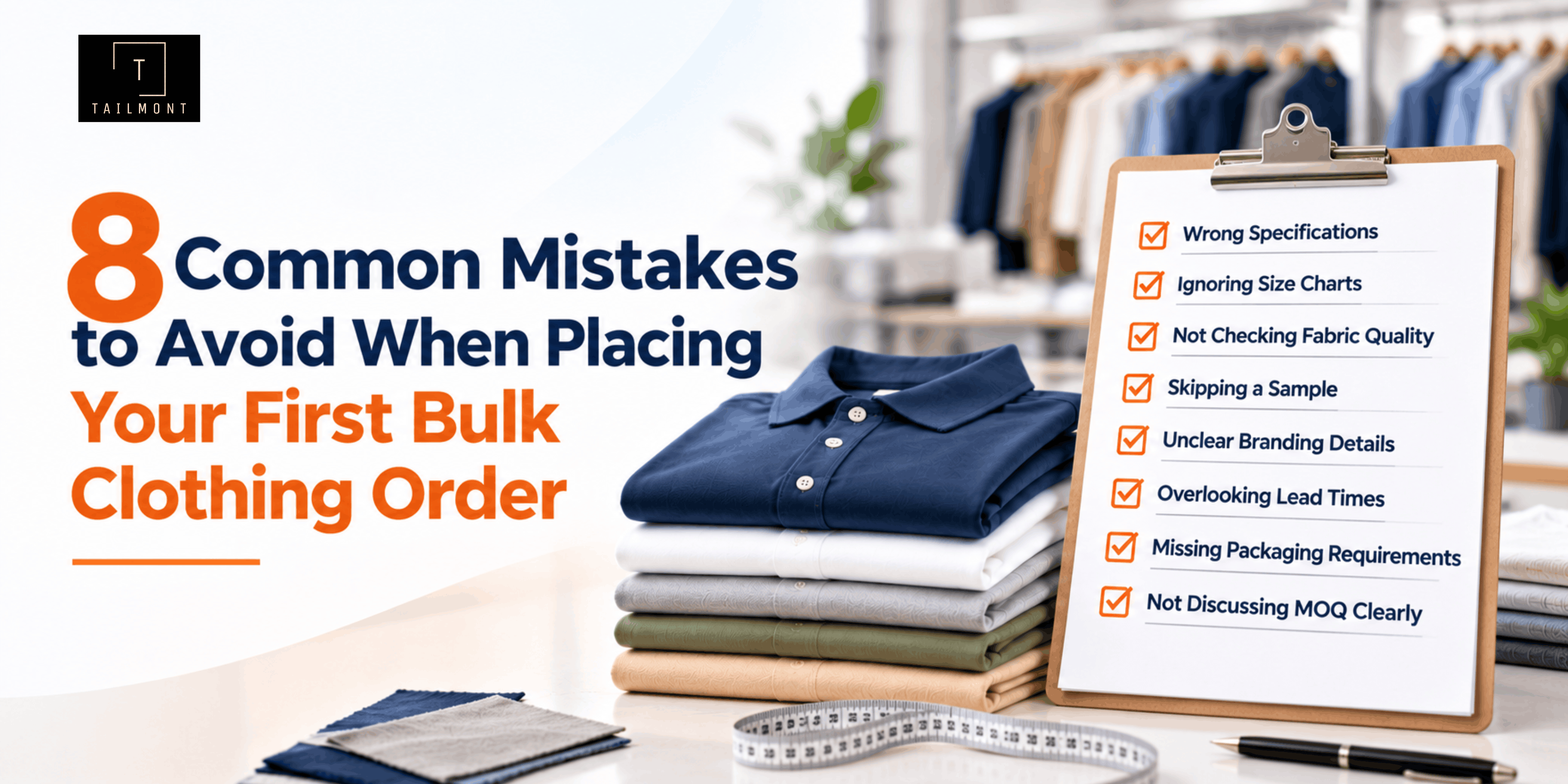
8 Common Mistakes to Avoid When Placing Your First Bulk Clothing Order
Placing your first bulk clothing order requires careful planning. From choosing the right manufacturer and fabric to checking samples, quality and delivery timelines, every decision matters. Understanding common sourcing mistakes can help you avoid unnecessary costs, delays and quality issues.
Here are eight common mistakes to avoid when ordering clothing in bulk and how to make better decisions at every stage.
1. Choosing a Supplier Based Only on Price
Price is naturally one of the first things buyers consider when comparing suppliers. However, selecting a manufacturer simply because they offer the lowest quotation can create problems later.
A lower price does not always mean better value. Differences in fabric quality, stitching, finishing, production standards and packaging can significantly affect the final product.
What Should You Evaluate Before Choosing a Supplier?
Before finalising a supplier, consider:
- Manufacturing experience: Check whether the supplier has experience producing the type of garments you require.
- Product quality: Review fabric quality, stitching, finishing and overall construction.
- Production capacity: Make sure the supplier can handle your required order quantity.
- Communication: Evaluate how clearly they respond to specifications, questions and production updates.
- Previous work: Request product samples or examples of completed manufacturing work.
When comparing quotations, look beyond the final price. Understand exactly what is included, such as fabric, trims, labelling, packaging and other production requirements.
2. Not Defining Product Specifications Clearly
One common apparel sourcing mistake is placing an order without clearly defining product specifications. Simply requesting 500 cotton T-shirts is not enough. Details such as fabric composition, GSM, fit, colour, measurements and finishing must be communicated properly.
What Should Your Specifications Include?
Before starting production, prepare a specification sheet covering:
- Fabric composition: 100% cotton, cotton-polyester blend or other materials.
- GSM: Specify the required fabric weight.
- Measurements: Include size-wise garment measurements.
- Fit and design: Mention regular, slim or oversized fit.
- Colours: Provide exact colour references.
- Stitching and finishing: Specify construction and finishing requirements.
- Branding: Include labels, tags, prints and embroidery details.
For custom clothing manufacturing, a detailed tech pack helps the manufacturer understand your requirements and reduces the chances of production errors.
3. Skipping the Sample Approval Stage
Moving directly into bulk production without checking a sample can lead to unexpected differences in fabric, fit, colour and finishing.
A physical sample helps you evaluate the garment before committing to a larger order.
What Should You Check in a Sample?
- Fabric quality, feel and thickness.
- Garment measurements and fit.
- Stitching and finishing.
- Colour accuracy.
- Print, embroidery and branding placement.
Review the sample carefully and communicate any changes before approving bulk production. This helps reduce errors and avoid costly corrections later.
4. Ordering the Wrong Quantity or Size Ratio
Ordering too many garments can result in excess inventory, while ordering too few may lead to missed sales opportunities. An unsuitable size ratio can also create stock imbalances.
How to Plan Your Order Quantity
Before placing wholesale clothing orders:
- Review previous sales and customer demand.
- Understand your target customers' size preferences.
- Consider seasonal requirements.
- Discuss minimum order quantities (MOQ) with the manufacturer.
- Plan quantities for each size and colour.
A well-planned order helps manage inventory, control costs and reduce unnecessary stock.
5. Ignoring Fabric Quality and Material Selection
Fabric plays an important role in a garment's comfort, appearance and durability. Choosing materials based only on price can lead to issues such as shrinkage, fading and poor fabric performance.
What Should You Consider?
- Fabric composition: Check cotton, polyester or blended fibre content.
- GSM: Choose the right fabric weight for the product.
- Comfort: Consider softness and breathability.
- Durability: Evaluate how the fabric performs after washing.
- Shrinkage and colour fastness: Check how well the material maintains its shape and colour.
Request fabric samples before approving materials for bulk garment manufacturing. The right selection helps maintain consistent product quality.
6. Overlooking Quality Control During Production
Approving a sample does not guarantee that every garment in a bulk order will have the same quality. Variations in stitching, measurements, colours and finishing can occur during production.
Important Quality Checks
Before production:
- Verify fabric and trims.
- Confirm measurements and specifications.
- Approve the final sample.
During production:
- Check stitching and garment construction.
- Monitor measurements and colour consistency.
- Identify defects early.
Before shipment:
- Inspect finished garments.
- Verify quantities, labels and packaging.
- Conduct final quality checks.
Discuss quality inspection standards with your manufacturer in advance to ensure that the finished products meet your expectations.
7. Not Understanding the Complete Cost Structure
Considering only the manufacturing price can lead to unexpected expenses. A bulk clothing order may involve additional costs depending on the product and shipping arrangement.
Costs to Consider
- Fabric and garment manufacturing.
- Custom labels, tags and branding.
- Printing and embroidery.
- Packaging and sampling.
- Freight and transportation.
- Insurance, customs duties and taxes, where applicable.
Ask your supplier for a detailed quotation that clearly explains all included and additional charges.
If you are importing garments, understand the agreed shipping terms, such as FOB and CIF, to know which costs and responsibilities belong to the buyer and seller.
Comparing the total landed cost helps you plan your purchasing budget more accurately.
8. Failing to Discuss Production and Delivery Timelines
Unclear production schedules can lead to delays, especially when working with seasonal collections or planned product launches.
Manufacturing timelines depend on factors such as fabric availability, order quantity, sample approval and production capacity.
What Should You Confirm?
- Sample development and approval dates.
- Fabric and material availability.
- Production start date and estimated completion.
- Quality inspection schedule.
- Packaging and dispatch dates.
- Shipping method and estimated delivery time.
Discussing these details in advance helps avoid misunderstandings and keeps the garment production process organised.
Final Checklist Before Placing Your First Bulk Clothing Order
Before confirming your order, make sure you have:
- Evaluated the manufacturer's experience and production capacity.
- Finalised fabric, design and garment specifications.
- Reviewed and approved the sample.
- Confirmed order quantities and size ratios.
- Checked fabric quality and composition.
- Agreed on quality inspection standards.
- Understood the complete cost structure.
- Confirmed production and delivery timelines.
Proper planning and clear communication can make bulk apparel ordering smoother and help avoid unnecessary sourcing problems.
Why Choose TailMont?
Looking for a reliable apparel manufacturing partner? TailMont brings your clothing ideas to life with quality-focused manufacturing, customisation and dependable sourcing support.
Let's build your next collection together!
Visit: https://tailmont.com/
Contact : +91 8971529797
Frequently Asked Questions
1. What is the minimum quantity for a bulk clothing order?
The MOQ depends on the manufacturer, garment type, fabric and customisation requirements.
2. Should I request a sample before placing a bulk order?
Yes. Approving a sample helps you check fabric, fit, measurements and finishing before production.
3. How can I ensure the quality of bulk clothing orders?
Share clear product specifications, approve samples and arrange quality inspections during and after production.